
The first mission and evidence-backed field chapter.
Apollo agricultural intelligence continuum
Understand the field.
Act with intelligence.Understand
the field.
Act with
intelligence.
Apollo connects field evidence, crop vision, intelligent soil, digital twins and autonomous robotics into one evolving engineering mission.
APLiving systems
intelligence
intelligence
01SIGHTPerception
02SOILSubstrate
03TWINSimulation
04ARGUSRobotics
MISSION ARCHITECTURE / LOCAL RESEARCH EDITION
CNN-led crop health and image intelligence.
Hydrogel, root-zone and resource-behaviour research.
ROS 2 perception, navigation and agricultural robotics.
01
THE MISSION
One continuum. Many engineering disciplines.
Agriculture is not one problem. Apollo is not one machine.
A field is a living system shaped by soil, water, weather, crop health, human decisions and machine action. Apollo is designed as a continuum that can observe these layers, reason across them and make the next action legible.
The programme has grown through distinct teams and research chapters. The original Apollo mission remains intact and credited. New internship work extends the soil-intelligence layer, while Apollo Sight and Apollo ARGUS develop perception and autonomy.
Mission constellation
Built as connected systems,
not isolated demos.
Each programme has its own engineering boundary, evidence and contributors. Together they form the wider Apollo research direction.
AP / 00Explore heritage →AP / 01View perception →AP / 02View intelligence →AP / 03View robotics →
Origin mission
Apollo AgriGuard
Preserved field work, original architecture, first-team contribution and mission media.
Computer vision
Apollo Sight
Crop detection, health classification and semantic perception.
AgriIntel contribution
Intelligent Soil
Digital-twin exploration of hydrogel, moisture and root-zone behaviour.
Robotics
Apollo ARGUS
ROS 2, semantic perception and autonomous field-system research.
02
FROM FIELD TO MODEL
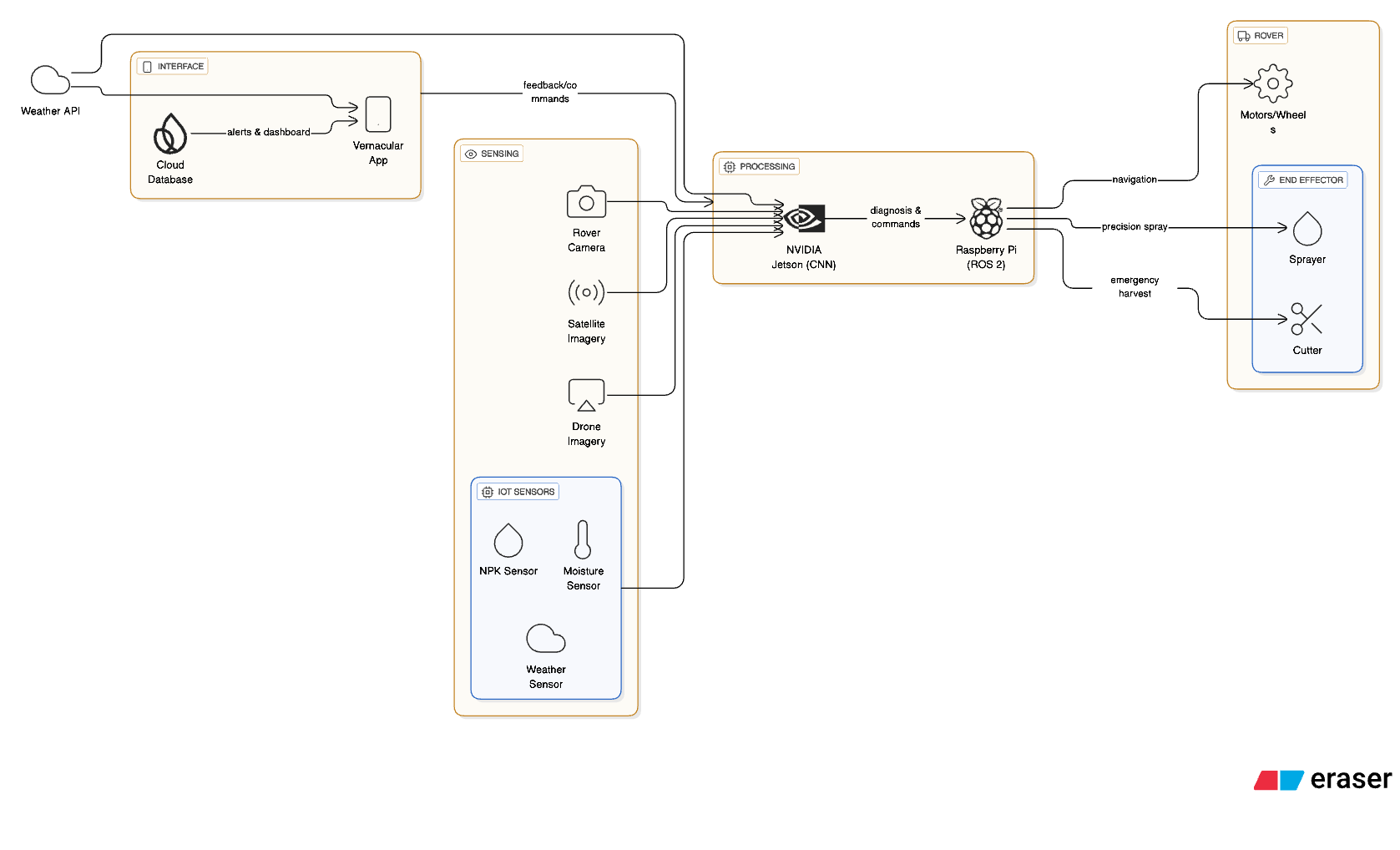
A history that stays visible
The first mission is a foundation, not a file to replace.
Apollo’s earlier work, field evidence, paper and first-team engineering remain available as a distinct heritage layer. New systems link back to that origin with explicit attribution.
Interactive environments
Enter the Apollo
digital-twin laboratory.
Original Three.js environments are connected directly from their preserved workspace, alongside the running Python state engine.
FULL FARM / 07
Farm command simulation
Inspect farm systems, weather, sensing, field machinery and decision objects.
Launch environment ↗SCENARIO / 06Crop scenario studio
Move through crop and intelligent-soil sequences in a recording-oriented interface.
Launch environment ↗MICRO / 03Root-zone laboratory
Explore hydrogel, nutrient loss, crop stress and substrate behaviour at micro scale.
Launch environment ↗ENGINEERING CONTEXT
These interactive environments present model behaviour and research scenarios. Field validation, agronomic use and operational deployment remain distinct review stages.
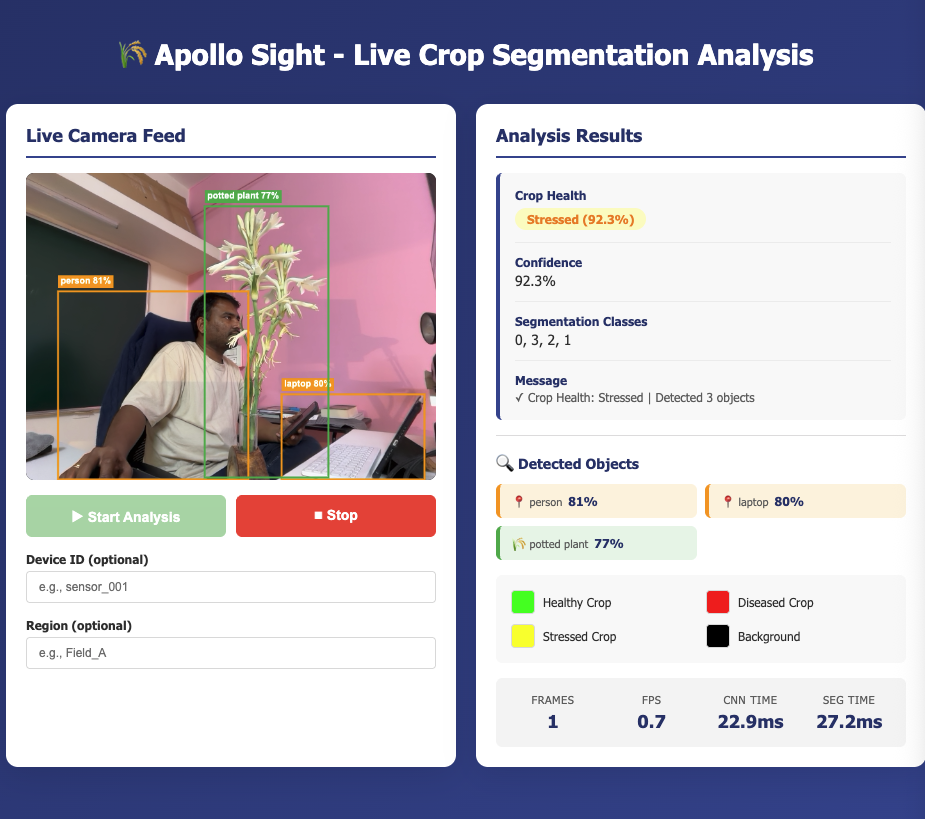
Current student contribution
Intelligent Soil / AgriIntel
Developed within MindforgeAI Internship 1.0 as a bounded contribution to the wider Apollo programme.
Vijayalaxmi K. Sundalam and team
Dakshini Anand Neel · Nandini Naresh Naral · Sunaina Shashikant Gaikwad
The team’s work extends Apollo through structured data, weather integration, digital-twin modelling and intelligent-soil exploration. Attribution is retained at the contribution layer; Apollo’s larger history remains independently visible.
Student source repository ↗03
PUBLIC KNOWLEDGE
Research · engineering · field notes
Engineering should leave a readable record.
Apollo’s publication layer will connect technical articles from Innoworks Press, research records through the IJAIE ecosystem, and project evidence from each mission team.


The Apollo continuum
Observe. Understand.
Transform.
From a first field mission to computer vision, intelligent soil, digital twins and robotics—Apollo is being built as a long-term engineering programme for living systems.
Enter the project lab